Saturday, 16 September 2023

Maximizing Your YouTube Channel's Growth: Strategies for Success.


1. **Content Planning:** Discuss how to plan your content, identify your target audience, and choose topics that resonate with viewers.


2. **Quality Production:** Share tips on improving video and audio quality, as well as editing techniques to make your videos more engaging.


3. **SEO and Keywords:** Explain the importance of optimizing video titles, descriptions, and tags for better discoverability on YouTube.


4. **Consistency:** Discuss the benefits of maintaining a consistent upload schedule to keep your audience engaged.


5. **Engagement and Interaction:** Highlight the significance of responding to comments and engaging with your viewers to build a loyal community.


6. **Promotion and Sharing:** Offer strategies for promoting your videos on social media, collaborating with others, and using YouTube features like end screens and cards effectively.


7. **Analytics and Metrics:** Provide insights on tracking your channel's performance, understanding YouTube analytics, and making data-driven decisions.


8. **Monetization Options:** Discuss various ways to monetize your YouTube channel, such as through ads, memberships, merchandise, and sponsorships.


9. **Staying Updated:** Mention the importance of staying informed about YouTube's policies and algorithm changes.


10. **Success Stories:** Share real-life success stories of YouTubers who have achieved significant growth and what others can learn from them.


Friday, 8 September 2023

Climate Change and the Global South: Addressing Challenges and Opportunities


Introduction:

In a world deeply impacted by the consequences of climate change, addressing this global crisis requires a unified effort from all nations. However, the burden of climate change often falls disproportionately on developing countries, as they face unique challenges in mitigating and adapting to its effects. In this blog post, we will explore the intersection of climate change, developing countries, and international organizations like the United Nations, the African Union, and the role of financial mechanisms such as Special Drawing Rights (SDRs) from the International Monetary Fund (IMF). Additionally, we'll discuss the concept of "loss and damage" and the importance of addressing it on a global scale.

1. Climate Change and Developing Countries:

   Climate change impacts, such as extreme weather events, rising sea levels, and food insecurity, are felt acutely in developing countries. These nations often lack the resources and infrastructure needed to adequately respond to and mitigate the effects of climate change.

2. The Role of International Organizations:

   a. **United Nations (UN)**: The UN plays a pivotal role in climate action through initiatives like the Paris Agreement. It fosters international cooperation to reduce greenhouse gas emissions and provides support to developing countries in their climate efforts.

   b. **African Union (AU)**: The AU focuses on addressing climate change in Africa, a continent highly vulnerable to its impacts. It advocates for regional strategies and cooperation to combat climate change.

3. Special Drawing Rights (SDRs) and Climate Finance:

   SDRs, a form of international reserve asset allocated by the IMF, have gained attention as a potential source of funding for climate action in developing countries. This resource allocation could help these nations finance projects aimed at reducing emissions and building resilience.

4. Loss and Damage:

   The concept of "loss and damage" refers to the irreversible impacts of climate change that go beyond adaptation measures. It includes the loss of lives, livelihoods, and cultural heritage. Recognizing and addressing loss and damage is a critical component of climate discussions.

Conclusion:

The intersection of climate change, developing countries, and international organizations is a complex and crucial topic in the fight against climate change. To build a sustainable and equitable future, it's essential to support developing nations in their efforts to mitigate and adapt to climate change, provide financial resources through mechanisms like SDRs, and acknowledge and address the losses and damages caused by this global crisis. By fostering collaboration on a global scale, we can work towards a more resilient and sustainable world for all.

Certainly, let's delve deeper into the topic:

5. Challenges Faced by Developing Countries:

   a. **Resource Constraints**: Developing countries often lack the financial resources needed for large-scale climate mitigation and adaptation projects. They may also face difficulties in accessing international financing due to limited creditworthiness.

   b. **Vulnerability**: Many developing nations are geographically vulnerable to climate change, with low-lying coastal areas, arid regions, and reliance on agriculture. They are more susceptible to extreme weather events and sea-level rise.

   c. **Capacity Building**: Building local capacity for climate action, including technology transfer and knowledge sharing, is crucial. Developing countries need assistance in developing sustainable practices and technologies.

6. The Paris Agreement:

   The Paris Agreement, adopted in 2015, is a landmark international treaty that aims to limit global warming to well below 2 degrees Celsius above pre-industrial levels. It emphasizes the principle of "common but differentiated responsibilities," recognizing that developed countries should take the lead in reducing emissions and supporting developing nations in their efforts.

7. Innovative Solutions:

   To address the unique challenges faced by developing countries, innovative solutions are essential:

   a. **Renewable Energy**: Transitioning to renewable energy sources like solar and wind power can help developing countries reduce their carbon emissions while providing access to clean and affordable energy.

   b. **Climate Resilience**: Investing in climate-resilient infrastructure, disaster preparedness, and sustainable agriculture practices can enhance the ability of developing nations to withstand climate impacts.

   c. **Green Finance**: The development of green finance mechanisms and partnerships can channel funding toward sustainable projects in developing countries.

8. The Role of Global Collaboration:

   Climate change is a global problem that requires global solutions. Developed countries must fulfill their commitments to provide financial assistance and technology transfer to developing nations. Collaborative efforts among nations, NGOs, and the private sector are vital to achieving meaningful progress.

9. Encouraging Success Stories:

   Highlighting success stories of developing countries that have made significant strides in climate action can inspire others and demonstrate that climate mitigation and economic development can go hand in hand.

10. The Urgency of Action:

   Climate change is a time-sensitive issue, and delays in addressing it can exacerbate its effects. Developing countries, with their burgeoning populations and economic growth, are at the forefront of this challenge. It's imperative that the global community acts swiftly and decisively to support them in their climate efforts.

In conclusion, addressing climate change in developing countries is a multifaceted task that requires global cooperation, innovative solutions, and a commitment to equity. By recognizing the unique challenges faced by these nations and providing the necessary support, we can work toward a sustainable future where all countries can thrive while mitigating the impacts of climate change.


Certainly, let's continue to explore this important topic in more depth:

11. Success Stories:

   It's essential to highlight specific examples of developing countries that have made significant strides in climate action. For instance, countries like Costa Rica, Bhutan, and Ethiopia have demonstrated remarkable commitment to renewable energy, reforestation, and sustainable development. These success stories can serve as inspirations and models for other nations.

12. Technology Transfer:

   Bridging the technology gap between developed and developing countries is crucial. Technology transfer agreements and partnerships can enable the adoption of cleaner and more efficient technologies in developing regions, facilitating emissions reductions and economic growth simultaneously.

13. Adaptation Strategies:

   Developing countries often need to focus on adaptation strategies to cope with the unavoidable impacts of climate change. These strategies may include building resilient infrastructure, improving water resource management, and implementing early warning systems for extreme weather events.

14. Global Solidarity:

   Climate change is a global problem, and addressing it requires a sense of shared responsibility. Developed countries can play a critical role by fulfilling their financial commitments to the Green Climate Fund and other climate finance mechanisms, which provide support to developing nations.

15. Education and Awareness:

   Climate education and awareness campaigns are essential in both developed and developing countries. These initiatives can help individuals, communities, and governments understand the urgency of climate action and inspire grassroots efforts to reduce emissions and adapt to change.

16. Policy and Governance:

   Effective climate policies and governance structures are fundamental to success. Developing countries often require assistance in crafting and implementing climate policies that align with their specific needs and circumstances.

17. Monitoring and Reporting:

   Transparent and accountable monitoring and reporting mechanisms are critical. These mechanisms can ensure that financial resources are used efficiently and that climate actions are on track to meet their objectives.

18. Long-Term Vision:

   Developing countries need to have a long-term vision for sustainable development that integrates climate action. This involves aligning economic and environmental goals to create a resilient and low-carbon future.

19. Climate Justice:

   The concept of climate justice emphasizes the moral and ethical dimensions of climate change. It underscores the responsibility of historically high-emitting nations to take the lead in reducing emissions and supporting developing countries in their efforts.

20. Collective Effort:

   Ultimately, addressing climate change in developing countries is not the responsibility of one group or nation alone. It requires a collective effort from governments, civil society, the private sector, and individuals around the world working together to mitigate the impacts of climate change and build a sustainable future for all.

In summary, addressing climate change in developing countries is a multifaceted endeavor that demands cooperation, innovation, and unwavering commitment. By acknowledging the unique challenges these nations face and providing support, we can collectively work towards a more equitable and sustainable world for current and future generations.

Tuesday, 5 September 2023

"Electric Scooter Battery Replacement Cost in India – A Comparative Analysis of Ola S1 Pro, Ather 450X, and TVS iQube"

1. Introduction
 Brief overview of the growing popularity of electric scooters in India.
Importance of understanding battery replacement costs.
2. Ola S1 Pro Battery Replacement Cost
Detailed information on the Ola S1 Pro electric scooter.
Cost of replacing the battery pack.
Factors that may affect the cost (e.g., warranty, location).
3. Ather 450X Battery Replacement CostIntroduction to the Ather 450X electric scooter.
Battery replacement expenses and related considerations.
Comparison with Ola S1 Pro's battery cost.
4. TVS iQube Battery Replacement CostOverview of the TVS iQube electric scooter.
Battery replacement cost for the TVS iQube.
How it stacks up against Ola S1 Pro and Ather 450X.
5. Factors Affecting Battery Replacement Costs
Discuss the various factors that can influence the cost of battery replacement.
Warranty terms and coverage.
Maintenance practices that can extend battery life.
6.Comparison and Analysis
Side-by-side comparison of battery replacement costs for the three electric scooters.
Highlight any unique features or advantages of each scooter regarding battery replacement.

7. Tips for Battery MaintenanceOffer practical tips for electric scooter owners to prolong battery life and reduce replacement costs.

8. Conclusion
Summarize the key points discussed in the blog.
Provide recommendations for potential electric scooter buyers based on battery replacement considerations.

9. Additional Resources
Include links to official websites, customer reviews, and other useful sources for readers to explore further.
10. Call to Action

share their experiences or ask questions in the comments section.


Monday, 4 September 2023

"Unlocking the Power of Mindfulness: A Journey to Inner Peace"


**Title: Unlocking the Power of Mindfulness: A Journey to Inner Peace**

**Introduction:**


**Part 1: Introduction**
- Introduction to Mindfulness
- The Importance of Inner Peace
- Origins of Mindfulness

**Part 2: What Is Mindfulness?**
- Defining Mindfulness
- Present-Moment Awareness
- Non-Judgmental Observation

**Part 3: The Benefits of Mindfulness**
- Stress Reduction
- Improved Mental Health
- Enhanced Focus and Productivity
- Better Relationships
- Physical Health Benefits

**Part 4: Practical Mindfulness Techniques**
- Mindful Breathing
- Body Scan Meditation
- Mindful Eating
- Mindful Walking
- Mindfulness Apps and Resources

**Conclusion: Your Journey to Inner Peace**
- Recap of Mindfulness Benefits
- Encouragement to Begin Your Mindfulness Journey
- A Call to Action: Start Practicing Mindfulness Today


In the fast-paced and often chaotic world we live in, finding moments of tranquility and inner peace can seem like an elusive dream. The constant barrage of emails, social media updates, work deadlines, and personal responsibilities can leave us feeling overwhelmed and disconnected from ourselves. It's no wonder that many people are turning to mindfulness as a way to navigate the storm and find that serene center within.

In this blog post, we will embark on a journey to explore the transformative power of mindfulness, a practice that has been gaining momentum as a tool for reducing stress, enhancing well-being, and fostering a profound sense of inner calm. Join us as we delve into the essence of mindfulness, its origins, and practical techniques to incorporate it into your daily life.

Are you ready to embark on this path to greater serenity and self-awareness? Let's begin our exploration of mindfulness and its potential to unlock the doors to inner peace.

The Origins of Mindfulness:

Before we dive into the practical aspects of mindfulness, it's essential to understand its origins. Mindfulness finds its roots in ancient Eastern philosophies, particularly Buddhism. The term "mindfulness" is a translation of the Pali word "sati" and the Sanskrit word "smṛti," both of which refer to the practice of awareness and presence.
Over 2,500 years ago, the Buddha himself emphasized the importance of mindfulness as a path to enlightenment and liberation from suffering. It was a core element of his teachings. However, mindfulness is not limited to any specific religious or cultural context. In the modern world, it has evolved into a secular practice accessible to people of all backgrounds and beliefs.

What Is Mindfulness?

At its core, mindfulness is the practice of intentionally paying attention to the present moment without judgment. It involves observing your thoughts, feelings, bodily sensations, and the world around you with a curious and non-reactive attitude. In doing so, you become fully engaged in your current experience, rather than being consumed by regrets of the past or worries about the future.

Mindfulness is not about emptying your mind of thoughts; it's about acknowledging and accepting them without attachment. This practice allows you to become more aware of your thought patterns and emotional reactions, ultimately giving you greater control over your responses to life's challenges.

The Benefits of Mindfulness:

The appeal of mindfulness lies in its ability to bring a wide range of benefits to those who practice it regularly. Some of these benefits include:

1. Stress Reduction: Mindfulness has been scientifically proven to reduce stress levels. By staying present in the moment, you can break the cycle of anxious and repetitive thoughts.

2.Improved Mental Health: Many individuals with anxiety, depression, or other mental health issues have found relief through mindfulness practices. It can increase emotional regulation and enhanceoverall well-being.

3.Enhanced Focus and Productivity: Mindfulness sharpens your ability to concentrate on tasks, making you more productive in both personal and professional endeavors.

4.Better Relationships: By being fully present in your interactions with others, you can improve your communication, empathy, and understanding, which in turn strengthens relationships.

5.Physical Health Benefits: Research suggests that mindfulness can have positive effects on physical health, including lower blood pressure, improved sleep, and a strengthened immune system.

In the upcoming sections of this blog post, we will explore various mindfulness techniques and strategies you can incorporate into your daily life. These practices will help you harness the power of mindfulness and guide you on your journey to inner peace.


Stay tuned for Part 2, where we will delve deeper into practical mindfulness exercises and tips for beginners.

---

Feel free to let me know if you'd like to continue, modify, or add specific content to the post!

Tuesday, 11 July 2023

हाथ की विवाह रेखा को शादी में सफलता के लिए महत्वपूर्ण माना जाता है। विवाह रेखा निम्नलिखित मामलों की जांच करने के लिए उपयोगी हो सकती है:

 रेखा की स्थिति: विवाह रेखा, जो हाथ की उंगली से निकलकर हृदय रेखा से मिलती है, निर्धारित करने के लिए विशेष महत्व रखती है। एक स्पष्ट, सुन्दर और अच्छी प्रमुखता वाली विवाह रेखा संघर्ष के बिना शादी के लिए अच्छी संकेत देती है।
  1. रेखा की लंबाई: एक लंबी विवाह रेखा अधिक उम्र तक शादी बनाए रखने के संकेत हो सकती है। हाथ के किनारों के पास स्थित विवाह रेखा ज्यादा उम्र तक साथ रहने की संभावना दर्शाती है।

  2. रेखा की ऊँचाई: रेखा की ऊँचाई शादी में सफलता के साथ आनंद और समृद्धि का संकेत दे सकती है। ऊँची विवाह रेखा धन, स्थायित्व और खुशहाली के लिए शादी के साथ बहुत अच्छी संकेत देती है।

  3. रेखा के चौड़ाई: विवाह रेखा की चौड़ाई भी महत्वपूर्ण हो सकती है। व्यापक और मोटी रेखा सामरिक और आर्थिक समर्थन की भरपूरता दर्शाती है। यह समृद्धि और स्थिरता के लिए शादी के लिए अच्छा संकेत हो सकती है।

  4. रेखा की प्रकृति: विवाह रेखा की प्रकृति भी महत्वपूर्ण है। स्पष्ट, अच्छी प्रमुखता वाली और सही रेखा अच्छे संबंधों, संघर्ष के बिना वैवाहिक जीवन के संकेत के रूप में दिखती है।

यह सुझाव दिए गए मामले शादी में सफलता के लिए हाथ की विवाह रेखा के विभिन्न पहलुओं को दर्शाते हैं, लेकिन ध्यान देने योग्य है कि पामिस्ट्री केवल एक आधारभूत संकेत प्रणाली है और इसे निश्चित तौर पर सच्चाई के रूप में नहीं लिया जा सकता है। इसलिए, इन रेखाओं के विश्लेषण को एक मनोरंजन के रूप में लें और आपके वैवाहिक या व्यक्तिगत जीवन के निर्णयों के लिए अन्य संबंधित प्राधान्यपूर्ण कारकों को भी मध्यस्थ रखे

रखाओं का महत्व: पाल्मिस्ट्री का एक परिचय

.
रखाओं का महत्व: पाल्मिस्ट्री का एक परिचय
  1. विवाह रेखा: शादी में सफलता के लिए क्या दिखती हैं हाथ की रेखाएं?
  2. व्यापार रेखा: व्यापार में सफलता के लिए कौन सी रेखाएं महत्वपूर्ण होती हैं?
  3. बच्चों की संतान रेखा: संतान प्राप्ति के लिए हाथ में क्या दिखता है?
  4. धन रेखा: धन की प्राप्ति और वित्तीय सफलता के लिए कौन सी रेखाएं महत्वपूर्ण होती हैं?
  5. स्वास्थ्य रेखा: हाथ की रेखाएं और स्वास्थ्य के बीच का संबंध क्या होता है?
  6. विदेश यात्रा रेखा: हाथ में विदेश यात्रा के लिए संकेत कौन से होते हैं?
  7. प्रेम रेखा: प्रेम और शादी के लिए हाथ में क्या दिखता है?
  8. मोहनी रेखा: क्या होती हैं मोहनी रेखा और इसका महत्व क्या होता है?
  9. पारिवारिक रेखा: हाथ में पारिवारिक संबंध और खुशहाली के लिए कौन सी रेखाएं महत्वपूर्ण होती है

Friday, 12 June 2020

​​Why do Fruits float in Water?

​​Why do Fruits float in Water?

Because the peel is designed to protect the inside of the orange, its structure is different. Besides being tougher than the sweet interior, the peel also contains a lot of air. The peel is less dense than water or light enough to float, but the inside Fruit is denser than Water so it sinks.
Different Fruits and Vegetables will also float or sink depending on their density. In general, apples, bananas, lemons, oranges, pears, and zucchinis will float, while avocados, potatoes, and mangoes will sink. Others like turnips and sweet potatoes sometimes sink and sometimes float.

​​Why we put Salt and Charcoal into Earth-pit while Earthing?

​​Why we put Salt and Charcoal into Earth-pit while Earthing?

Earthing resistance is not the resistance of the electrode. The earthing resistance is not same all over the area. The value of earting resistance is depends upon the soil resistivity of the particular area. Actually the measured earth resistance is not only the resistance of the electrode, it is the combined resistance of conductor and the associated soil. During fault, if the soil resistance is higher the fault current cannot dissipate to associate soil.
To improve the conductivity of poor soil during fault current, salt and charcoal around the conductor is used to dissipate. 
Charcoal is used to retain the moisture for long duration because it is an adsorbent and salt is added to increase the conductivity both these products help to pass the leakage current through earth wire as early as possible to remove the chances of shock.
We can practice permanent earthing compounds which are moisture independent as per IEEE 80–2013 clause 14.5(d).

​​How does Stealth technology work?

​​How does Stealth technology work?

The goal of stealth technology is to make an airplane invisible to radar. There are two different ways to create invisibility:
The airplane can be shaped so that any radar signals it reflects are reflected away from the radar equipment.
The airplane can be covered in materials that absorb radar signals.
Most conventional aircraft have a rounded shape. This shape makes them aerodynamic, but it also creates a very efficient radar reflector. The round shape means that no matter where the radar signal hits the plane, some of the signal gets reflected back:
A stealth aircraft, on the other hand, is made up of completely flat surfaces and very sharp edges. When a radar signal hits a stealth plane, the signal reflects away at an angle. 
In addition, surfaces on a stealth aircraft can be treated so they absorb radar energy as well. The overall result is that a stealth aircraft like an F-117A can have the radar signature of a small bird rather than an airplane. The only exception is when the plane banks -- there will often be a moment when one of the panels of the plane will perfectly reflect a burst of radar energy back to the antenna.

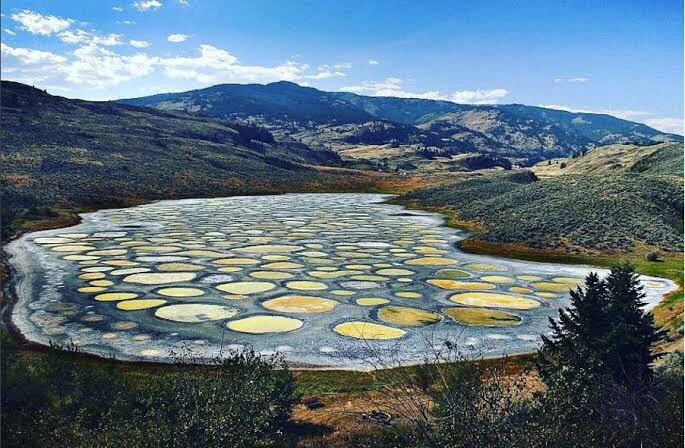
​​Why is Spotted Lake spotted?

​​Why is Spotted Lake spotted?


Spotted Lake is a small lake rich in a variety of Minerals, including Calcium, Sodium sulphates and Magnesium sulphate. During the hot summer months, much of the water in the lake evaporates, leaving concentrations of these minerals that form the spots visible in the lake. Spotted Lake was for centuries and remains revered as a sacred site thought to provide therapeutic waters. It is also known as Kliluk Lake.

​​What is the difference between ‘Cemetery’ and ‘Graveyard’?

​​What is the difference between ‘Cemetery’ and ‘Graveyard’?

From about the 7th century C.E., the process of burial was firmly in the hands of the Church (the Christian organization), and burying the dead was only allowed on the lands near a church (now referring to the building), the so-called churchyard. The part of the churchyard used for burial was called graveyard.
As the population of Europe started to grow, the capacity of graveyards was no longer sufficient (the population of modern Europe is almost 40 times higher than it was in the 7th century). By the end of the 18th century, the unsustainability of church burials became apparent, and completely new places for burying people, independent of graveyards, appeared—and these were called cemeteries.

​​What is Wearable Technology?

​​What is Wearable Technology?

Wearable technology, wearables, fashion technology, tech togs, or fashion electronics are smart electronic devices (electronic device with micro-controllers) that are worn close to and/or on the surface of the skin, where they detect, analyze, and transmit information concerning e.g. body signals such as vital signs, and/or ambient data and which allow in some cases immediate biofeedback to the wearer.
Wearable devices such as activity trackers are an example of the Internet of Things, since "things" such as electronics, software, sensors, and connectivity are effectors that enable objects to exchange data (including data quality) through the internet with a manufacturer, operator, and/or other connected devices, without requiring human intervention.
Wearable technology has a variety of applications which grows as the field itself expands. It appears prominently in consumer electronics with the popularization of the Smart Watch and activity tracker. Apart from commercial uses, wearable technology is being incorporated into navigation systems, advanced textiles, and healthcare.

​​How does Smoke Detector Alarm work?

​​How does Smoke Detector Alarm work?

The two most commonly recognized smoke detection technologies are ionization smoke detection and photoelectric smoke detection.
Ionization smoke alarms are generally more responsive to flaming fires.
How they work: Ionization-type smoke alarms have a small amount of radioactive material between two electrically charged plates, which ionizes the air and causes current to flow between the plates. When smoke enters the chamber, it disrupts the flow of ions, thus reducing the flow of current and activating the alarm. 
Photoelectric smoke alarms are generally more responsive to fires that begin with a long period of smoldering (called “smoldering fires”).
How they work: Photoelectric-type alarms aim a light source into a sensing chamber at an angle away from the sensor. Smoke enters the chamber, reflecting light onto the light sensor; triggering the alarm.
For best protection, it is recommended both (ionization and photoelectric) technologies be used in homes. In addition to individual ionization and photoelectric alarms, combination alarms that include both technologies in a single device are available.

​​What are BioPlastics?

​​What are BioPlastics?

Bioplastics are biodegradable materials that come from renewable sources and can be used to reduce the problem of plastic waste that is suffocating the planet and contaminating the environment.
Plastic is the third most commonly used petroleum derivative in the world.
As an alternative, the use of bioplastics is being promoted, consisting in obtaining natural polymers from agricultural, cellulose or potato and corn starch waste.
These are 100% degradable, equally resistant and versatile, already used in agriculture, textile industry, medicine and, over all, in the container and packaging market, and biopolymers are already becoming popular in cities throughout Europe and the United States for ecological reasons: they are known as PHA.
These are polyesters produced by fermenting raw vegetable materials with a series of bacterial strains. For example, PHAs can be used for injection molding to build automobile parts and for many other uses. Specifically, PHA (PolyHydroxyAlkanoate) is extracted from bacteria such as pseudomonas. In its natural form, it is similar to transparent kitchen film, with the difference that it is an authentic bioplastic.

​​What is an Auxanometer? How does it Work?

​​What is an Auxanometer? How does it Work?

An auxanometer is an apparatus for measuring increase or rate of growth in plants. In case of an arc-auxanometer, there is a wire fixed with the plant apex on one end and a dead-weight on the other. It passes over a pulley which has a pointer attached to it. When the plant's height increases, the pulley rotates and the pointer moves on a circular scale to directly give the magnitude of growth.
The "rate of growth" is a derived measurement obtained by dividing the length of growth measured by the auxanometer, by the time said measurement took.
Sensitive auxanometers allow measurement of growth as small as a micrometer, which allows measurement of growth in response to short-term changes in atmospheric composition. Auxanometers are used in the laboratory, the field, and the classroom.
Koningsberger invented the 
auxanometer.

​​What is the difference between Table salt and Sea salt?

​​What is the difference between Table salt and Sea salt?

Table salt and sea salt have the same chemical composition, but different processing methods give them a slightly different taste and texture. Sea salt is produced by evaporating the water from seawater or saltwater lakes, leaving behind salt but also small amounts of minerals such as magnesium, calcium and potassium, which can affect flavour. The large salt crystals give it a relatively coarse texture. Table salt, on the other hand, is typically mined from salt deposits. It is washed, purified and stripped of any contaminants. Additives are then added to prevent it from clumping. Iodised salt also contains extra potassium iodide.

​​What is Solar Cycle?

​​What is Solar Cycle?

Our Sun is a huge ball of electrically-charged hot gas. This charged gas moves, generating a powerful magnetic field. The Sun's magnetic field goes through a cycle, called the solar cycle.
Every 11 years or so, the Sun's magnetic field completely flips. This means that the Sun's north and south poles switch places. Then it takes about another 11 years for the Sun’s north and south poles to flip back again.
The solar cycle affects activity on the surface of the Sun, such as sunspots which are caused by the Sun's magnetic fields. As the magnetic fields change, so does the amount of activity on the Sun's surface.

Wednesday, 3 June 2020

How to hack mobile phone

How to hack mobile phone 
I teach u complete tutorial of mobile hacking tool 

Download link given below 

Download  

Open this website 

How to use it

  • InstallInstall the application on the phone that you want to monitor. You can install the application for free and you will have a free trial. GPS will always be tracked for free.

  • Login. The cell tracking app uploads activities to your secure online account. You can view all the activities if you login to this server using the account that you have created when you installed the application.

Download for free Spapp Monitoring on the phone that you want to monitor.


Register your account when you install the app. You will receive a free trial - No credit card required.


Start monitoring by accessing our website using your credentials.


Use it for

This application is great for:

  • tracking your children. You can monitor your children in order to keep them out of harm's way.
  • tracking your employees. You can monitor your employees in order to see if they use their phone or their time for other reasons.
  • backing up data from your phone.
  • tracking your phone if it was stolen


Monitor remotely

Spy Phone App is using the smartphone's internet connection in order to send the data to our server. After that you can monitor the logs remotely from our server. You will need to login to our server using the email and password supplied when you registered the application on the smartphone.


Monday, 1 June 2020

ਲਾਹਣਤ ਕਾਂਗਰਸ ਸਰਕਾਰ ਨੂੰ ਕਰੋਨਾ ਬਹਾਨੇ ਚਲਾਨ ਕੱਟ ਕੇ ਪੈਸੇ ਇਕੱਠੇ ਕਰ ਰਹੀ ਹੈ

ਲਾਹਣਤ #ਕਾਂਗਰਸ ਸਰਕਾਰ ਨੂੰ ਕਰੋਨਾ ਬਹਾਨੇ ਚਲਾਨ ਕੱਟ ਕੇ ਪੈਸੇ ਇਕੱਠੇ ਕਰ ਰਹੀ ਹੈ
----------------------------------------
ਅਾਹ ਸਰਕਾਰ ਤਾਂ ਜਮਾਂ ਈ ਨੰਗਪੁਣੇ ਤੇ ਉੱਤਰ ਅਾਈ ਅੱਜ ਚੌਂਕ ਚ ਮੁਲਾਜ਼ਮਾਂ ਨੇ ਗੱਡੀ ਰੋਕ ਲਈ ਅਖੇ 500 ਰੁਪਏ ਦਾ ਚਲਾਨ ਅਾ ਤੇਰੇ ਮਾਸਕ ਨੀ ਪਾਇਆ ਮੈਂ ਕਿਹਾ ਜਨਾਬ ਗੱਡੀ ਦੇ ਸ਼ੀਸ਼ੇ ਬੰਦ ਅਾ ਅੰਦਰ ਬੈਠਾ ਨਾ ਮੈ ਕਰੋਨਾ ਫੈਲਾ ਸਕਦਾਂ ਨਾ ਮੈਨੂੰ ਕਿਸੇ ਤੋ ਹੋ ਸਕਦਾ ਦੂਜਾ ਮਾਸਕ ਮੇਰੇ ਕੋਲ ਅਾ ਜਦੋ ਬਾਹਰ ਬਜ਼ਾਰ ਵਗੈਰਾ ਜਾਊ ਮਾਸਕ ਪਾ ਲਊ ਪਰ ਕਿੱਥੇ ਮੰਨਣ ਅਾਲੇ ਮੈਂ ਕਿਹਾ ਕਾਗਜ਼ ਚੈਕ ਕਰੋ ਬਣਦਾ ਚਲਾਨ ਕਰੋ ਮੈਂ ਕੋਰਟ ਚ ਭਰੂੰ ਫਿਰ ਦੂਜੇ ਪਾਸੇ ਹੋ ਗਏ ਅਖੇ ਇਹ ਤਾਂ ਦਾਨ ਅਾ ਸੇਵਾ ਅਾ ਸਿਹਤ ਵਿਭਾਗ ਨੂੰ ਜਾਣੇ ਅਾ ਮੈਂ ਕਿਹਾ ਫਿਰ ਚਲਾਨ ਕਿਉ ਕਹਿ ਰਹੇ ਹੋ ਸਿੱਧਾ ਕਹੋ ਜਗਰਾਤਾ ਪਰਚੀ ਅਾਲਾ ਹਿਸਾਬ ਅਾ ਨਾਲੇ ਜਿਹੜੇ ਜਨਾਬ ਰਸੀਦ ਭਰ ਰਹੇ ਇਹ ਦਾ ਅਾਵਦਾ ਮਾਸਕ ਕਿੱਥੇ ਅਾ ਦੂਜਾ ਰਸੀਦ ਭਰ ਹਰੇਕ ਅੱਗੇ ਉਹੀ ਪੈਨ ਕਰ ਦਿੰਨੇ ਉਹ ਕਿ "ਕਰ ਦਸਤਖਤ" ਇਹ ਪੈਨ ਜਦੋ ਸ਼ਾਮ ਤੱਕ ਹਜ਼ਾਰਾਂ ਹੱਥਾਂ ਚ ਜਾਉ ਕੀ ਉਹਦੇ ਨਾਲ ਕਰੋਨਾ ਨੀ ਫੈਲਦਾ ?
ਸਮਝ ਨੀ ਅਾਉਦਾ ਜਿਹੜਾ ਮੁਲਾਜ਼ਮ #ਪਾਰਕਿੰਗ ਪਰਚੀ ਵਾਂਗ ਨੋਟ ਇਕੱਠੇ ਕਰੀ ਜਾਂਦਾ ਉਸਨੂੰ ਕਰੋਨਾ ਦਾ ਡਰ ਨਹੀਂ ? 
ਇਸ ਤੋ ਚੰਗਾ ਤਾਂ ਚੌਕ ਚ ਗੋਲਕ ਜਾਂ ਡਰੰਮ ਕੱਟ ਕੇ ਰੱਖ ਦਿਉ। ਲੋਕ ਨੋਟ ਵਿੱਚ ਸੁੱਟੀ ਜਾਣਗੇ ਘੱਟੋ ਘੱਟ ਮੁਲਾਜ਼ਮ ਤਾਂ ਕਰੋਨਾ ਤੋ ਬਚ ਜਾਣਗੇ। ਨਾਲੇ ਜਿਹੜੇ ਅੱਗੇ ਟੈਕਸ ਲੈਨੇ ਉਹ ਕਿੱਥੇ ਹਨ। ਸਿਹਤ ਬਜਟ ਕਿੱਥੇ , ਜਿਹੜਾ #covid Cm care fund ਇਕੱਠਾ ਹੋਇਆ ਸੀ ਉਸਦਾ #ਹਿਸਾਬ ਕਿਤਾਬ ਕਿੱਥੇ ?
ਇਸੇ ਨਾਕੇ ਤੇ ਉਦੋ ਨੂੰ ਇਕ ਸਵਿਫਟ ਅਾਲਾ ਜੋੜਾ ਅੜਿੱਕੇ ਅਾ ਉਹ ਕਹਿੰਦਾ ਪਤੀ ਪਤਨੀ ਅਾ ਜੀ ਅੱਗੋ ਜਨਾਬ ਕਹਿੰਦੇ ਕਿ ਕੈਮਰੇ ਚ ਅਾ ਗਏ ਤੁਸੀਂ ਅਸੀਂ ਤਾਂ ਤੁਹਾਡਾ ਪਰਵਾਰ ਬਚਾ ਰਹੇ ਆ ਬਿਮਾਰੀ ਤੋਂ, ਉਹ ਕਹਿੰਦਾ ਜਨਾਬ ਜੇ ਪਰਵਾਰ ਈ ਬਚਾਉਣੇ ਤਾਂ ਦੋ ਦੋ ਮੁਲਾਜ਼ਮ ਲੋਕਾਂ ਦੇ ਬੈਡ ਰੂਮਾਂ ਚ ਵੀ ਤਾਇਨਾਤ ਕਰ ਦਿਉ !
ਇਸ ਲਈ ਕੈਪਟਨ ਸਾਹਬ ਬੇਨਤੀ ਅਾ ਜੇ ਪੈਸੇ ਈ ਇਕੱਠੇ ਕਰਨੇ ਅਾ ਤਾਂ ਟੈਂਡਰ ਕੱਢ ਕੇ ਪੰਜਾਬ ਦੇ ਸਾਰੇ ਚੌਂਕ ਮੰਗਤਿਅਾ ਨੂੰ ਠੇਕੇ ਤੇ ਦੇ ਦਿਉ ਵਿਚਾਰੇ ਪੁਲਿਸ ਮੁਲਾਜ਼ਮ ਤਾਂ ਇਧਰੋ ਵਿਹਲੇ ਹੋ ਅਾਪਣੀ ਡਿਉਟੀ ਵੱਲ ਧਿਅਾਨ ਦੇ ਸਕਣਗੇ।
ਕਰੋਨਾ ਕਾਰਨ ਲੱਗੇ #ਲੌਕਡਾਊਨ ਨੇ ਲੋਕਾਂ ਦੇ ਕਾਰੋਬਾਰ ਠੱਪ ਕਰ ਦਿੱਤੇ ਹਨ ਪਰ ਉਹ ਕਰੋਨਾ ਦੀ ਆੜ ਵਿਚ ਲੋਕਾਂ ਦੇ ਚਲਾਨ ਕੱਟ ਕੇ ਪੈਸੇ ਇਕੱਠੇ ਕਰ ਰਹੀ ਹੈ। ਲੋਕਾਂ ਦੀ ਮੱਦਦ ਤਾ ਕੀ ਕਰਨੀ ਸੀ ਸਗੋ ਜੇਬਾਂ ਕੱਟਣ ਦੀ ਕੋਿਸਸ ਹੋ ਰਹੀ ਹੈ। ਲਾਹਣਤ ਹੈ ਅਜਿਹੀ ਸਰਕਾਰ ਦੇ ਜਿਸ ਨੇ ਕਰੋਨਾ ਦੀ ਆੜ ਵਿਚ ਲੁੱਟ ਮਚਾਈ ਹੋਈ ਹੈ।